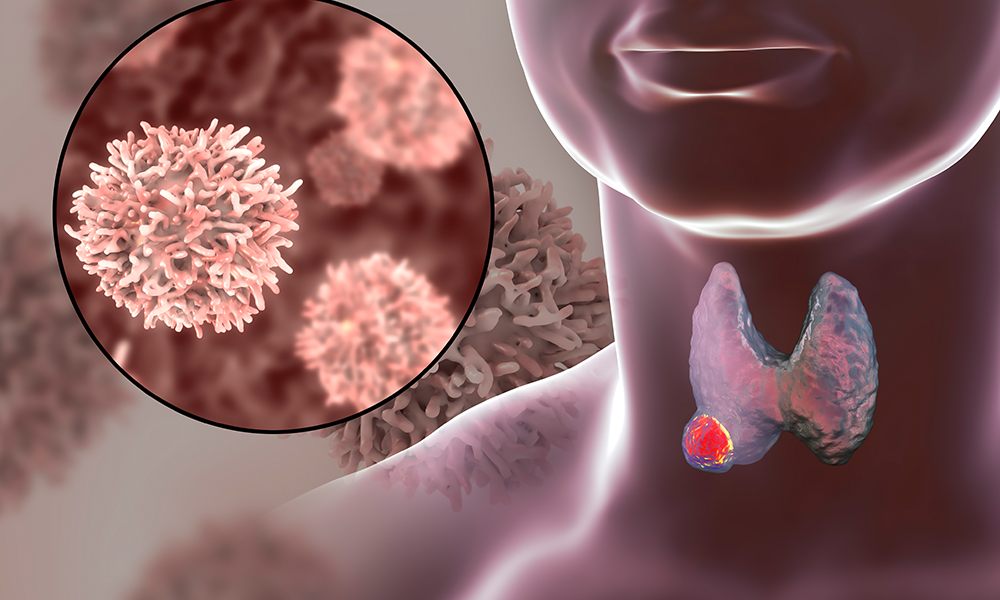
Thyroid cancer symptoms may include a new neck lump, swelling near the thyroid, persistent hoarseness, difficulty swallowing, breathing discomfort, or enlarged neck lymph nodes. Most thyroid nodules are not cancer, and some thyroid cancers cause no symptoms, so a physical examination and targeted testing are more reliable than self-assessment.
What Does a Thyroid Cancer Lump Feel Like?
Touch alone cannot determine whether a thyroid nodule is cancerous.
A thyroid lump often appears in the lower front part of the neck, near the base of the throat. It may be noticed in a mirror, felt while swallowing, or discovered during an unrelated examination or imaging test.
A concerning change can include a new lump, visible swelling, growth over time, nearby enlarged lymph nodes, or a firm area that doesn’t resolve. The National Cancer Institute identifies neck swelling or a lump as a recognized thyroid cancer sign while noting that early disease may produce no symptoms.
For an examination, open-neck clothing can make access easier. Avoid repeatedly pressing the lump, since self-palpation cannot establish its cause.
Why Can Thyroid Cancer Change the Voice?
A growing neck mass may affect nearby structures.
The thyroid sits close to the trachea, esophagus, voice box, and nerves involved in vocal-cord movement. Persistent hoarseness or a voice change therefore deserves assessment, particularly when it appears with a neck lump or swallowing difficulty.
Most hoarseness comes from infections, reflux, vocal strain, allergies, smoking-related irritation, or benign vocal-cord problems. A brief voice change during a cold is different from unexplained hoarseness that continues or progressively worsens.
Avoid tight lightweight accessories around a neck swelling. The goal is comfort, not testing whether pressure changes the lump.
Which Neck Symptoms Should Be Documented?
Describe function as well as appearance.
| Observation | What to record | Why it matters |
| Lump or swelling | Location and visible growth | Helps guide examination and imaging |
| Voice change | Onset and persistence | May indicate laryngeal or nerve involvement |
| Swallowing trouble | Solids, liquids, or both | Shows whether function is affected |
| Breathing discomfort | Position and progression | May indicate airway pressure |
Mention neck pain, ear-radiating discomfort, coughing, previous head or neck radiation, thyroid conditions, and family history of thyroid or endocrine tumors. Record whether the lump moves during swallowing, but don’t use that feature to diagnose it yourself.
How Is a Thyroid Nodule Evaluated?
Ultrasound and fine-needle aspiration are common next steps.
A clinician may examine the thyroid and neck lymph nodes and order blood tests to assess thyroid function. Thyroid hormone results provide useful context but don’t alone determine whether a nodule is cancerous.
Ultrasound shows a nodule’s size and internal features and can guide fine-needle aspiration. During aspiration, a thin needle collects cells for examination. Not every nodule requires biopsy; the decision considers ultrasound findings, size, history, and clinical risk.
Choose comfortable shoes for clinic visits if the evaluation involves several departments. Practical comfort matters, even though it doesn’t change the test result.
Where Thyroid-Lump Decisions Go Wrong
Testing every tiny incidental nodule can cause harm.
Modern imaging finds many small thyroid nodules that would never create symptoms or affect a person’s lifespan. Overdiagnosis can lead to anxiety, repeated procedures, and treatment for tumors that might never have caused a medical problem. NCI research identifies this as a major concern in thyroid cancer care.
The opposite mistake is ignoring a growing lump because thyroid nodules are usually benign. Evaluation should be proportionate: neither automatic panic nor indefinite delay. Ultrasound features, symptom progression, history, and biopsy results guide the decision.
Red Flags: When to Get Medical Help
Arrange prompt assessment for a new or growing neck lump, persistent hoarseness, unexplained swallowing difficulty, enlarged neck nodes, neck pressure, or ongoing pain. Seek urgent care for trouble breathing, noisy breathing, choking, inability to swallow saliva, rapidly expanding neck swelling, severe weakness, fainting, or facial and neck swelling accompanied by breathing problems. These symptoms can indicate airway compression, bleeding into a thyroid nodule, infection, or another condition requiring immediate attention.
Frequently Asked Questions
Are most thyroid nodules cancerous?
No. Most thyroid nodules are benign. Their cause cannot be determined reliably by touch, so clinicians use history, examination, ultrasound findings, and sometimes fine-needle aspiration.
Can thyroid cancer occur with normal thyroid blood tests?
Yes. Thyroid hormone levels and cancer risk answer different questions. A person may have a thyroid nodule requiring evaluation even when routine thyroid function tests are normal.
Does every thyroid lump need a biopsy?
No. Biopsy decisions depend on the nodule’s ultrasound appearance, size, growth, symptoms, medical history, and other clinical factors.
Get the Lump Assessed Without Assuming the Outcome
A neck lump is a reason for evaluation, not a reason to declare cancer. Note when it appeared, whether it is growing, and whether swallowing, breathing, or your voice has changed. A focused neck examination and ultrasound can determine whether observation, biopsy, or another step makes sense.
This article provides general education and is not a diagnosis or substitute for medical care.