
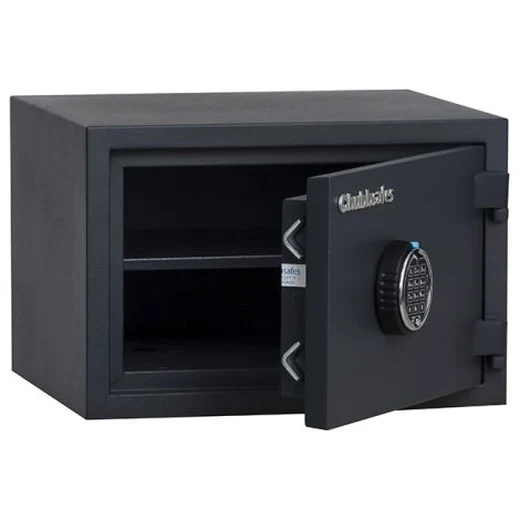
Buy A Safe outranks Bunnings for government and retail buyers who need certified security rather than a basic combination box. Government offices sourcing SCEC-approved units and retailers managing daily cash drops both need documented burglary and fire ratings, brand-backed warranties, and installation support that a general hardware aisle doesn’t provide. Bunnings wins on walk-in convenience and entry-level pricing for low-value household storage. For procurement-grade purchases in 2026, Buy A Safe stocks Chubb, Yale, CMI and Dominator models built for compliance, with delivery and installation handled in major Australian cities.
This comparison covers what separates Buy A Safe from Bunnings when the buyer is a government department, a retail chain, or any business that needs a safe to meet an actual compliance or insurance requirement rather than just lock a shed. Shoppers who search for safes bunnings often land on petty cash tins and basic key-lock boxes sold alongside garden tools — fine for a household junk drawer, not fine for cash reconciliation or SCEC-rated document storage. The criteria below — certification support, brand range, installation logistics and pricing transparency — are what procurement teams and retail operations managers actually ask about before signing a purchase order in 2026.
Verdict summary: Buy A Safe vs Bunnings for procurement buyers
- Compliance certification: Buy A Safe — stocks SCEC-approved and commercial-rated models a government auditor or insurer will actually accept.
- Brand and model range: Buy A Safe — Chubb, Yale, CMI and Dominator spanning home, commercial, high-security and fireproof categories.
- Installation and delivery: Buy A Safe — delivery and installation covered in major Australian cities instead of a staff member loading a floor safe into a ute.
- After-sales servicing: Buy A Safe — safe opening, lock servicing and rekeying for units already bolted into a cash room or office floor.
- Walk-in convenience: Bunnings — same-day pickup from a local store beats waiting on freight when a buyer just needs a basic lockbox today.
- Entry-level pricing: Bunnings — cheaper on bottom-tier combination boxes, which is fine for petty storage but not for cash handling or firearms compliance.
How we compared
The comparison weighs what government procurement officers and retail loss-prevention managers actually list as requirements: documented security and fire ratings, brand depth across commercial, high-security, fireproof and jewellery-grade use cases, installation and delivery logistics, and post-purchase servicing. Pricing was checked for transparency across the full purchase — unit, delivery and installation — rather than just the lowest sticker price, because that’s how procurement buyers budget in 2026.
Buy A Safe: overview
Buy A Safe is an Australian online retailer specialising in safes and vaults for home and business use, stocking brands including Chubb, Yale, CMI and Dominator across home safes, commercial safes, gun safes, fireproof safes, key cabinets, filing cabinet safes and deposit safes. The customer base runs from homeowners and gun owners through to businesses in retail, healthcare, government, education, finance and automotive — exactly the mix that needs a documented security rating rather than a generic lockbox. Government and retail buyers specifically get access to SCEC-approved models, dual-control commercial safes and cash-rated units sized for daily takings, with guidance on choosing an SCEC-approved safe for government offices and commercial safes built for franchise retail chains. Pricing varies by model, fire rating and cash rating and is listed against each product on site, rather than buried in a quote process. Installation, repair and safe opening services are available in major Australian cities, which matters when a 200kg-plus unit needs to be positioned and bolted correctly rather than just dropped at a loading dock. The direct Buy A Safe vs Bunnings comparison goes deeper on model-by-model differences for buyers weighing both options. The limitation: this isn’t a walk-in hardware store, so a buyer who wants to carry a safe out the door on the same afternoon won’t get that here.
Bunnings: overview
Bunnings is a general hardware and home improvement chain that stocks a small range of safes alongside tools, hardware and garden equipment, mostly compact key-lock and combination boxes aimed at households. The strength is physical availability — walk into a store, pick up a basic unit, drive home the same day. The range isn’t built around compliance: there’s no equivalent to a certified commercial cash-rated line or an SCEC-approved government option, and installation isn’t part of the purchase. For protecting spare keys, documents or a modest amount of cash at home, that’s workable. For a retail cash room or a government records office, it’s the wrong tool.
Security certification: Buy A Safe vs Bunnings
Certification is the dimension government and retail buyers care about most, because it determines whether insurance pays out and whether an audit passes. Buy A Safe lists SCEC-approved options alongside commercial burglary and fire ratings on individual product pages, with a dedicated guide on choosing an SCEC-approved safe for government offices for buyers who need to justify the purchase to a procurement committee. Bunnings’ safe range is positioned as general household security hardware, not as certified compliance equipment, which is consistent with its role as a broad hardware retailer rather than a security specialist. Winner: Buy A Safe, because a government or retail buyer needs the certification paperwork, not just a locking box.
Brand and model range: Buy A Safe vs Bunnings
Buy A Safe carries Chubb, Yale, CMI and Dominator across home, commercial, gun, fireproof and deposit safe categories, giving a retail buyer the option to match a specific cash rating or fire rating to their exact risk, down to high-security safes over 200kg for larger operations. Bunnings’ safe range sits inside its broader hardware and home storage section and is weighted toward entry-level household models rather than named security brands with commercial-grade ratings. Winner: Buy A Safe, because brand depth is what lets a buyer size the safe to the actual dollar value or document sensitivity being stored.
Installation and delivery: Buy A Safe vs Bunnings
A 150kg-plus commercial or high-security safe isn’t something a retail manager should be wrestling into a back office alone. Buy A Safe covers delivery and installation in major Australian cities, which matters for anchoring a unit correctly into a concrete floor or cash room wall. Bunnings’ model is pickup or standard freight — the buyer is on their own for placement and bolting once it’s home. Winner: Buy A Safe, because installation isn’t an add-on for a compliance-grade purchase, it’s part of making the rating mean anything.
Cash and fire rating documentation: Buy A Safe vs Bunnings
A retail business calculating how much cash it can legally hold on site, or a records office estimating how long files survive a fire, needs a documented rating, not a marketing description. Buy A Safe publishes cash and fire ratings per model so a buyer can match the number to their actual exposure. Bunnings’ listings describe general security features without the same depth of documented commercial ratings across its range. Winner: Buy A Safe, because the rating is the whole point of the purchase for this buyer type.
Pricing and upfront cost: Buy A Safe vs Bunnings
For a basic household lockbox, Bunnings is cheaper upfront and available without waiting on delivery. For a government or retail buyer, the comparison isn’t apples to apples — a certified commercial or SCEC-approved unit from Buy A Safe costs more than a Bunnings combination box because it’s a different category of product, with installation and a documented rating built into the price. Winner: Bunnings on sticker price for entry-level storage; the trade-off is no certification and no installation support.
After-sales support: Buy A Safe vs Bunnings
Safes get locked out, locks wear, and codes get forgotten. Buy A Safe offers safe opening, lock servicing and rekeying in major cities, which matters once a unit is already bolted down and the lock needs attention years after purchase. Bunnings’ after-sales involvement typically ends at the till. Winner: Buy A Safe, because a safe is a decade-plus purchase and servicing access matters more over that timeframe than it does on day one.
Which should you choose?
A government office sourcing a records or evidence safe needs the SCEC-approved route through Buy A Safe, not a Bunnings aisle — the certification guide on choosing an SCEC-approved safe for government offices is the starting point. A retail chain managing daily cash drops across multiple stores should look at commercial safes for franchise retail chains rather than a generic combination box. A jewellery retailer storing high-value stock needs a purpose-built option, not a household safe — see the safes built for jewellery store retailers. A household buyer who just wants to lock away spare keys or a passport on a tight budget is well served by a basic Bunnings unit. A business installing any safe heavier than a household model should check guidance on moving a heavy safe safely before committing to DIY placement.
FAQ
Does Bunnings sell SCEC-approved safes?
No. Bunnings’ range is general household security hardware. Buyers needing SCEC-approved units for government offices should look at Buy A Safe’s certified range instead.
Is Buy A Safe more expensive than Bunnings?
On entry-level combination boxes, yes, Bunnings is cheaper. On certified commercial or high-security safes, the comparison doesn’t apply because Bunnings doesn’t stock an equivalent product with installation and documented ratings included.
What safe brands does Buy A Safe carry for retail cash handling?
Chubb, Yale, CMI and Dominator, across commercial and deposit safe categories sized for daily cash drops and end-of-day takings.
Can government offices get a safe installed, not just delivered?
Yes — Buy A Safe covers installation in major Australian cities, which matters for anchoring a safe correctly rather than leaving it free-standing.
What’s the real difference between a Bunnings safe and a commercial-grade safe?
A commercial-grade safe carries a documented cash or burglary rating and often a fire rating tested to a named standard, which a Bunnings household combination box typically doesn’t carry.
Conclusion
Buy A Safe is the better pick for government and retail buyers in 2026 because certification, brand range, installation and servicing all matter more to that buyer than same-day pickup. Bunnings still has a place for low-stakes household storage where a basic lockbox is genuinely enough. Anyone searching safes bunnings for a procurement-grade purchase should start with the certified commercial and SCEC-approved range instead of the hardware aisle.