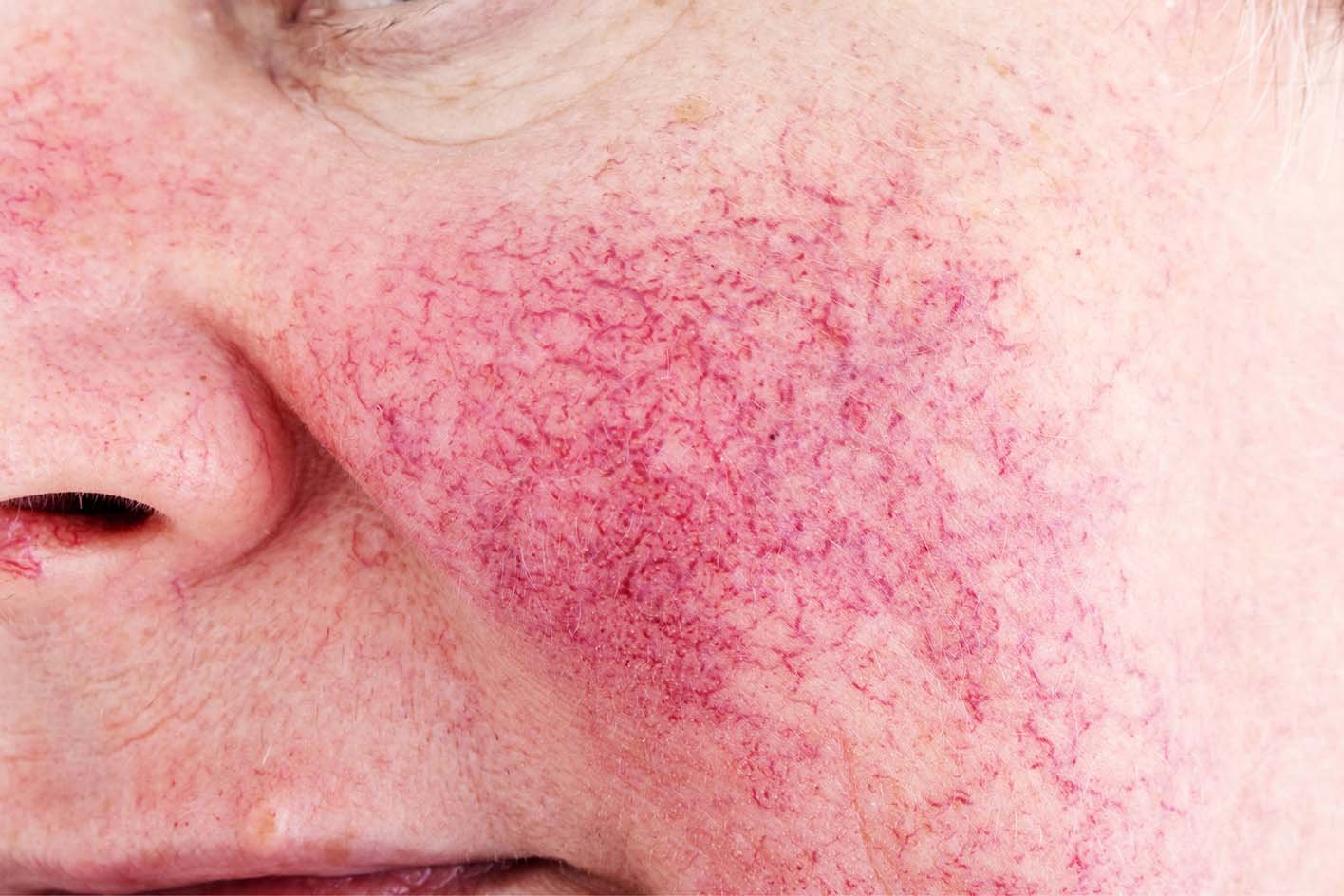
Rosacea symptoms may include easy flushing, persistent facial redness or deeper discoloration, visible blood vessels, acne-like bumps, burning, stinging, dryness, and eye irritation. It usually affects the central face, particularly the cheeks and nose, although signs differ across skin tones.
Rosacea can resemble acne or sensitive skin. The difference becomes clearer when facial warmth, repeated flushing, eye symptoms, or visible vessels appear alongside the bumps.
What Does Early Rosacea Usually Look Like?
Rosacea often begins with a tendency to flush easily. The cheeks may feel hot after sun exposure, exercise, stress, a warm room, or a hot drink. The color may disappear at first but remain longer as the condition progresses.
On lighter skin, redness and small visible blood vessels may be easy to see. On darker skin, warmth, swelling, burning, persistent brown or violet discoloration, and acne-like bumps may be more noticeable than redness.
| Rosacea sign | How it may appear | Common confusion |
| Flushing | Temporary warmth and color | Normal blushing |
| Persistent color | Red, brown, or violet area | Sunburn |
| Papules or pustules | Acne-like bumps | Adult acne |
| Eye irritation | Dry, gritty, burning eyes | Allergy |
A trigger journal resource may help record patterns, but a trigger list should not be treated as proof that every flush is rosacea.
Which Symptoms Separate Rosacea From Acne?
Rosacea may produce papules and pustules, but it generally does not create the same pattern of blackheads and whiteheads seen in acne. Persistent central facial color, visible vessels, burning, and easy flushing point more strongly toward rosacea.
Skin may become unusually sensitive. Water, cosmetics, sunscreen, cleanser, or moisturizer may suddenly sting. Dryness can occur even when acne-like bumps are present, making strong acne products difficult to tolerate.
Rosacea can also thicken the skin over time. This most commonly affects the nose but may occur on the chin, forehead, eyelids, or ears. Thickening deserves professional evaluation rather than stronger exfoliation.
What Commonly Triggers Facial Redness?
Trigger patterns are personal. Common examples include sunlight, heat, overheating during exercise, emotional stress, hot drinks, spicy foods, alcohol, cold weather, wind, and irritating skin-care products. A factor that triggers one person may have little effect on someone else.
A facial redness journal can record weather, meals, exercise, stress, skin products, and how long flushing lasts. Its limitation is that several exposures often occur together. A hot outdoor meal, for example, may combine sun, heat, spice, and alcohol.
The goal isn’t to avoid life. It is to identify repeatable patterns and reduce exposures that consistently produce uncomfortable flares.
Can Rosacea Affect the Eyes?
Yes. Ocular rosacea can cause dry, gritty, burning, itchy, or watery eyes. Eyelids may become swollen or red, lashes may develop crusting, and light sensitivity can occur. In some people, eye symptoms appear before obvious facial changes.
These symptoms are sometimes mistaken for allergies or ordinary dry eyes. The distinction matters because untreated ocular rosacea can occasionally affect vision.
Keep gentle skin-care notes separate from eye-treatment instructions. Products safe for facial skin should not automatically be placed near or inside the eyes.
What Skin-Care Choices Are Usually Better Tolerated?
Use a mild fragrance-free cleanser and wash with fingertips rather than a rough cloth or cleansing brush. Rinse with lukewarm water, pat dry, and allow the skin to settle before applying products.
Introduce new products gradually. A simple moisturizer may reduce dryness, but even products labeled for sensitive skin can sting during an active flare. Patch testing a small facial area may reduce the chance of widespread irritation, although it cannot predict every reaction.
Sun protection is valuable because sunlight is a frequent trigger. The best sunscreen is one you can apply consistently without burning or stinging. Some people tolerate mineral formulas better, but texture and skin tone compatibility vary.
Medical treatment can target bumps, persistent color, visible vessels, eye symptoms, or thickened skin. Each approach has limits, and several features may require different treatments.
Where Rosacea Management Commonly Goes Wrong
Treating rosacea exactly like acne can cause trouble. Strong scrubs, drying toners, aggressive peels, and frequent exfoliation may increase burning and redness.
Trying to eliminate every possible food or activity is another mistake. A long generic trigger list can create anxiety without revealing what affects your skin. Track repeated personal reactions instead.
People also wait too long to mention eye symptoms. Dryness, crusting, or burning may look minor, but early care matters when rosacea involves the eyes. Cosmetic coverage can hide redness; it cannot protect vision or stop skin thickening.
Red Flags: When to Get Medical Help
Contact a dermatologist or eye doctor promptly for red or swollen eyelids, persistent eye pain, marked light sensitivity, a feeling that something is trapped in the eye, worsening crusting, or any change in vision. Treating ocular rosacea early can reduce the risk of serious eye complications.
Seek urgent care for sudden vision loss, severe eye pain, facial swelling with breathing difficulty, or a rapidly spreading blistering rash after a product or medicine. Firm facial bumps or progressive thickening of the nose, chin, forehead, ears, or eyelids also warrant professional assessment.
Frequently Asked Questions
Is rosacea the same as adult acne?
No. Both may produce inflamed bumps, but rosacea often includes flushing, persistent facial color, burning, visible vessels, sensitive skin, or eye symptoms.
Can rosacea occur on darker skin tones?
Yes. Redness may be less obvious, while warmth, burning, swelling, persistent brown or violet discoloration, and acne-like bumps may be easier to notice.
Does avoiding every rosacea trigger cure it?
No. Avoiding personal triggers may reduce flares, but it does not guarantee permanent clearance. Treatment may still be needed for persistent redness, bumps, eye symptoms, or thickening.
Track the Flush Before Changing Everything
Use consistent photographs and record what happened during the hours before each flare. Keep the skin-care routine gentle, protect your face from sun and harsh weather, and report eye symptoms early. A focused pattern is more useful than removing every food and product at once.
The AAD guide to rosacea signs and symptoms offers additional clinical information.
This article provides general education and is not a diagnosis or personalized medical advice.