
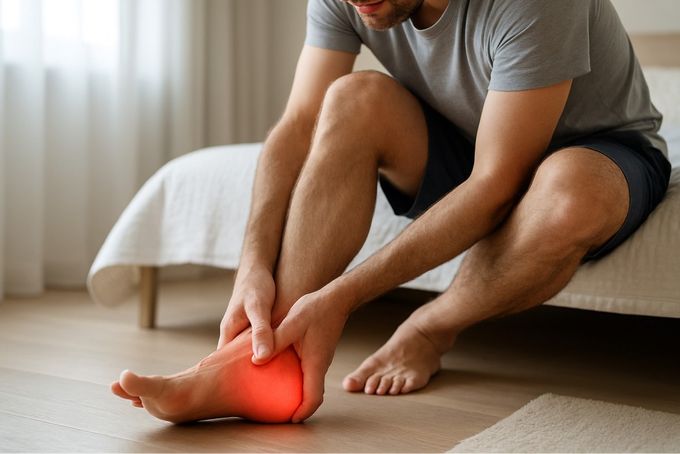
Plantar fasciitis symptoms usually include stabbing or aching pain beneath the heel, especially during the first steps after getting out of bed. Pain may ease after several minutes of movement and return after prolonged standing, walking, running, or rising after a long period of sitting.
Why Is Heel Pain Worse With the First Steps?
The plantar fascia is a strong band of tissue running along the bottom of the foot between the heel and toes. It supports the arch and handles repeated loading during standing and walking.
After a period of rest, the tissue and nearby structures may feel stiff. The first steps suddenly load the painful area, producing a sharp sensation near the inner underside of the heel. The discomfort often changes after walking briefly rather than remaining identical all day.
Mayo Clinic describes increased pain after sleeping or sitting, sharp pain when pressure is placed on the heel, arch discomfort, stiffness, and possible heel swelling.
| Timing | Common feeling | Useful clue |
| First morning steps | Sharp heel pain | Eases after brief movement |
| After sitting | Sudden restart pain | Returns on standing |
| Long standing | Dull or increasing ache | Builds with load |
| After exercise | Post-activity soreness | May worsen once stopped |
What Activities Commonly Aggravate Plantar Fascia Pain?
Long periods of standing, sudden increases in walking or running, hard surfaces, and unsupportive footwear may aggravate symptoms. Limited ankle movement or tightness around the calf and Achilles region may also influence heel loading.
Small walking routine choices matter. Jumping from a low step count to long daily walks can irritate the foot even when each individual walk feels manageable.
Pain isn’t always caused by one bad shoe or one workout. Work demands, training changes, foot mechanics, recovery, and surface hardness may combine. The exact cause remains unclear in some cases.
How Can You Distinguish It From Other Heel Problems?
Plantar fasciitis usually causes pain beneath the heel or along the arch. Achilles tendinitis tends to hurt behind the heel or along the tendon above it. Bursitis may cause tenderness and warmth around a cushioning sac.
Stress injury, nerve irritation, inflammatory disease, bruising, and other foot conditions can also cause heel pain. Pain after a fall or sudden landing deserves a different level of caution than gradually developing first-step pain.
The Mayo Clinic plantar fasciitis guide explains the plantar fascia’s role in supporting the arch and absorbing stress during walking.
What Details Should You Record?
Note the exact location: under the center of the heel, toward the inner edge, through the arch, or behind the heel. Record whether pain is worst on the first step, during activity, or afterward.
Keep daily heel-pain notes alongside changes in footwear, running distance, standing time, and work surface. This can reveal a workload pattern that a single appointment might miss.
Save exercise guidance and your saved treatment plan so you don’t progress several variables at once. Changing shoes, running distance, stretches, and strengthening simultaneously makes it harder to identify what helps or aggravates the foot.
Where Heel-Pain Self-Care Goes Wrong
Walking barefoot on hard floors may keep provoking the painful area. So can continuing high-impact exercise because the heel temporarily feels better after warming up.
Aggressive rolling or stretching is another problem. Mild discomfort isn’t the same as forcing sharp pain into the heel.
Relying only on soft inserts may provide temporary comfort but won’t automatically rebuild load tolerance. And returning to full running volume after one pain-free morning can restart the cycle.
Red Flags: When to Get Medical Help
Seek prompt assessment after a fall, forceful landing, or sudden injury when you cannot bear weight normally. Urgent evaluation is also appropriate for a hot, red, rapidly swollen foot; fever; an open wound; major numbness; or a foot that becomes pale or cold.
Arrange a clinical assessment when pain persists, occurs at rest or at night, steadily worsens, or causes a limp. People with diabetes, poor circulation, or reduced foot sensation should seek individualized guidance earlier rather than relying only on home care.
Frequently Asked Questions
Can plantar fasciitis cause arch pain?
Yes. Although heel pain is the best-known symptom, discomfort may extend along the plantar fascia into the arch of the foot.
Why does heel pain improve after walking?
Gentle movement may temporarily reduce stiffness and make the first-step pain less intense. Symptoms can return after prolonged standing, exercise, or another period of rest.
Should you keep running with plantar fasciitis?
Continuing unchanged mileage may keep the tissue irritated. Activity often needs temporary modification, followed by a gradual return based on pain, strength, walking tolerance, and professional guidance when needed.
Make the First Step Your Measurement
Track first-step pain each morning and reduce the activity pattern that repeatedly brings it back. Supportive footwear and gradual loading may help, but persistent heel pain deserves assessment. Seek prompt care after trauma, inability to bear weight, marked numbness, redness, warmth, or fever.
This article provides general education and is not a diagnosis or substitute for care from a qualified healthcare professional.