
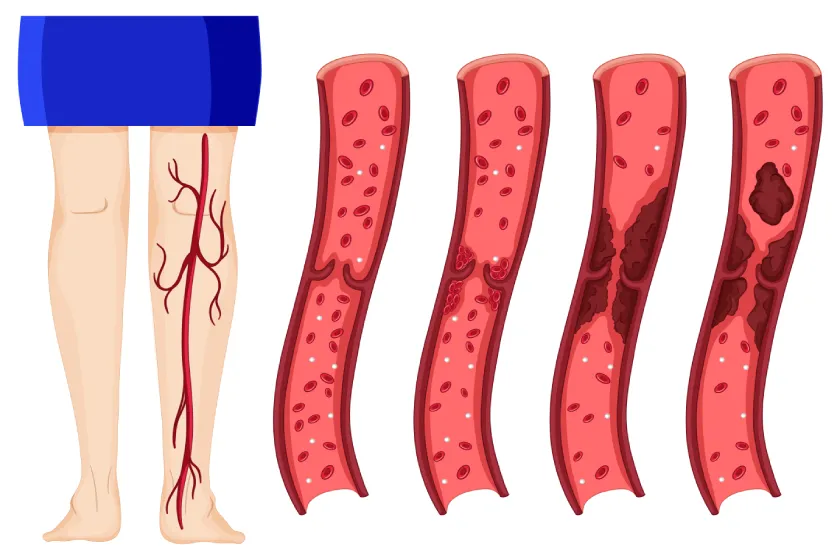
Deep vein thrombosis symptoms commonly include unexplained swelling, pain, tenderness, warmth, cramping, or skin discoloration in one leg. Some clots produce no obvious symptoms. A DVT can become life-threatening if part of the clot travels to the lungs, so unexplained one-sided leg changes need prompt medical assessment.
What Do Deep Vein Thrombosis Symptoms Look Like?
DVT often affects a deep vein in the leg, though clots can occur elsewhere. Swelling may involve the calf, ankle, thigh, or most of the limb. Pain can feel like soreness, cramping, pressure, or a pulled muscle.
The skin may feel warmer than the matching area on the other leg and may appear red, purple, darker, or otherwise discolored. Tenderness may occur without a remembered injury.
Record a short leg symptom timeline that includes when swelling or pain began and whether it is worsening. Don’t postpone care to create a detailed log.
The NHLBI’s DVT guidance lists swelling, pain, tenderness, cramping, aching, increased warmth, and red or discolored skin among possible symptoms.
A normal-looking leg doesn’t completely exclude a clot. The CDC notes that about half of people with DVT may have no symptoms.
Who Is More Likely to Develop a Leg Clot?
Risk can rise when blood flow slows, a blood vessel is injured, or the blood becomes more likely to clot. Recent surgery, hospitalization, prolonged immobility, serious injury, cancer, pregnancy, the period after delivery, estrogen-containing medication, older age, obesity, and a previous clot can contribute.
Long journeys usually present a greater concern when combined with another risk factor. Simply taking one flight doesn’t mean a person has DVT, but new one-sided swelling or pain after prolonged travel shouldn’t be dismissed.
Clear clot risk awareness helps people mention recent surgery, travel, hospitalization, pregnancy, medication use, and previous clots when seeking care. These details affect clinical judgment but don’t confirm a clot.
And an active person can still develop DVT. Fitness does not remove every risk.
How Do Doctors Confirm or Exclude DVT?
Symptoms alone cannot reliably distinguish DVT from a muscle injury, skin infection, ruptured cyst, vein inflammation, or other causes. Clinicians combine the history, physical findings, and estimated probability with testing.
Duplex ultrasonography is the standard imaging test used to look for clots in deep veins. A D-dimer blood test may help when the clinical probability is low or moderate, but results require careful interpretation.
| Assessment | Purpose | Limitation |
| Clinical history | Identifies symptoms and risk factors | Cannot confirm DVT alone |
| Physical examination | Compares swelling, warmth and tenderness | Findings may overlap with other conditions |
| D-dimer blood test | Detects material linked to clot breakdown | Many conditions can raise the result |
| Duplex ultrasound | Looks at vein flow and compression | Repeat imaging may occasionally be needed |
Keep discharge papers, medication lists, and circulation health guidance together after surgery or hospitalization. These details help clinicians understand recent risk exposures.
Where People Mistake DVT for Something Minor
A leg clot is often mistaken for a muscle pull because both can cause calf pain. Waiting for the leg to become dramatically swollen is risky, especially when recent surgery, immobility, cancer, pregnancy, estrogen use, or previous DVT is part of the story.
Another mistake is comparing symptoms with online photographs. Skin tone, clot location, and swelling patterns differ. A leg may not look red at all.
Don’t use walking, stretching, or home massage as a diagnostic test. Temporary changes in discomfort don’t establish the cause. And don’t take leftover blood-thinning medication; these drugs can cause serious bleeding and require professional supervision.
Red Flags: Watch for Pulmonary Embolism
Call emergency services immediately for sudden shortness of breath, chest pain that worsens with a deep breath or cough, coughing up blood, a fast or irregular heartbeat, severe lightheadedness, fainting, or very low blood pressure symptoms.
These may indicate a pulmonary embolism, which occurs when a clot blocks blood flow in the lungs. A PE can occur without noticeable DVT symptoms. The CDC advises immediate medical help when possible PE symptoms appear.
For unexplained one-sided swelling, warmth, pain, or discoloration without breathing symptoms, contact a healthcare professional promptly for instructions.
Frequently Asked Questions
Does DVT pain always occur in the calf?
No. Pain or swelling may affect the calf, thigh, ankle, arm, or another area, depending on where the clot forms.
Can a DVT feel like a pulled muscle?
Yes. Aching, cramping, or tenderness can resemble a strain. Risk factors, unexplained swelling, warmth, and discoloration make medical assessment more pressing.
Can you have a pulmonary embolism without leg symptoms?
Yes. A clot may cause no recognizable leg symptoms before affecting the lungs. Sudden breathing difficulty or chest pain requires emergency evaluation.
Get One-Sided Leg Changes Assessed Promptly
Don’t wait for every classic sign to appear. Contact a healthcare professional promptly when unexplained swelling, warmth, pain, or discoloration affects one limb, particularly after a known risk exposure. Call emergency services immediately if breathing trouble, chest pain, coughing blood, or fainting develops.
This article provides general education and does not replace assessment by a qualified healthcare professional.