
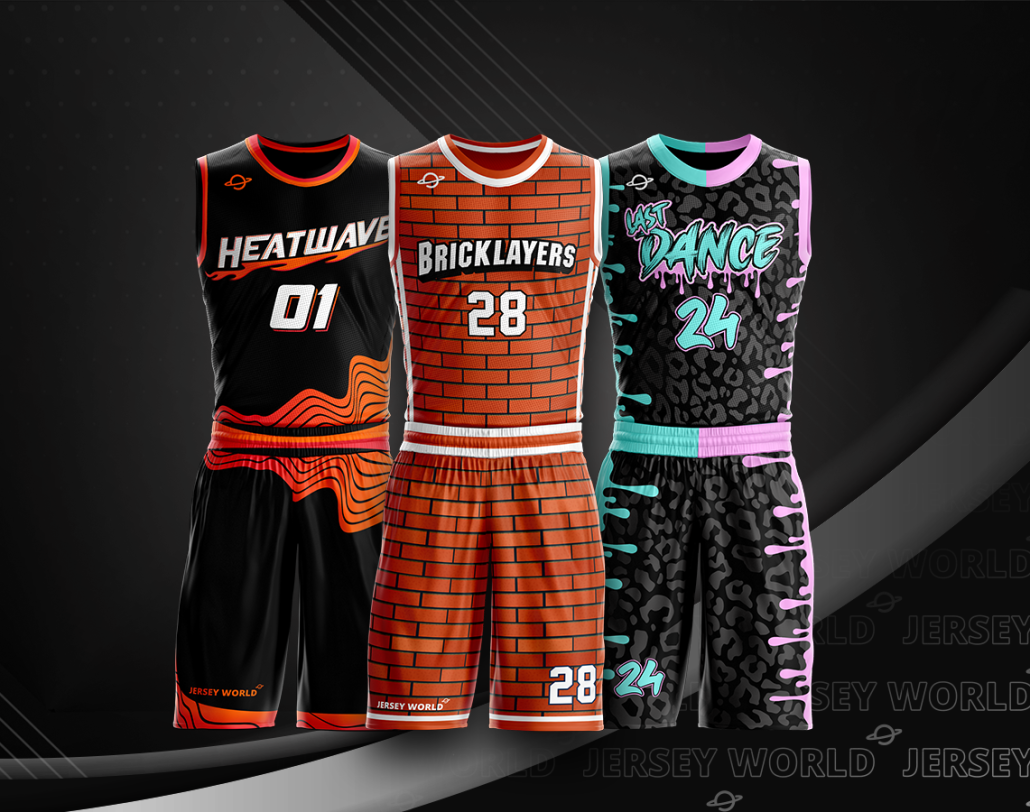
TL;DR: Reversible basketball jerseys work for practice kits when you get the fabric weight, colour contrast, and numbering placement right — get any one of those wrong and you end up reordering. FE Custom builds reversible jerseys to order for Australian clubs and schools, with squad sizing and sublimated numbering handled as part of the same order. This guide walks through the seven decisions that determine whether a reversible set survives a full season of practice or gets binned after term one.
Most clubs buy reversible jerseys to cut kit costs — one jersey does the job of two singlets when you split a squad for scrimmage. The problem is that a badly specced reversible jersey shows the opposite colour through the mesh, cracks at the numbers within a season, or doesn’t fit the mixed-age squad it was ordered for. This guide covers the decisions in order: fabric, colour, sizing, numbering, sampling, minimum order quantities, and care — the same sequence a supplier walks a club through before cutting fabric.
What You’ll Need Before You Order
- A squad roster with confirmed sizes (junior and senior sizing charts differ, so measure rather than guess)
- Two team colours with enough contrast that referees and teammates can tell sides apart at a glance
- A player number list, including any names required on the reverse
- A budget per jersey and a total squad count (this decides which minimum order quantity tier you land in)
- A supplier that does sublimation printing rather than iron-on vinyl, since reversible panels need the print baked into the fabric rather than sitting on top of it — FE Custom runs sublimation across its reversible basketball range for exactly this reason
- A timeline — reversible jerseys take longer to produce than single-sided kit because two colour layouts have to be printed and stitched together
Step 1: Decide Whether Reversible Is the Right Call for Your Squad
Reversible jerseys solve one specific problem: needing two team colours without buying two full kits. If your squad only ever plays as one colour, a reversible jersey adds cost for no benefit.
Reversible makes sense for training squads that scrimmage internally, school PE departments running intra-school competitions, and clubs fielding multiple grades off one budget. It makes less sense for a club with a fixed strip and no internal colour-split need.
Common mistake: ordering reversible jerseys for a representative team that competes in a fixed home/away kit — most state basketball associations expect a consistent strip for graded fixtures, so reversible gear is better suited to training and social competition than to sanctioned representative matches.
Step 2: Choose a Fabric That Won’t Show the Opposite Colour Through
This is the step most clubs skip and regret. A reversible jersey is two layers of fabric bonded or stitched together — if the mesh is too light, the darker of the two colours bleeds through to the lighter side under gym lighting.
Heavier interlock or double-knit polyester blends hold colour separation better than lightweight singlet mesh. Ask your supplier directly whether the fabric is rated for reversible use, not just standard printing — a supplier who builds reversible jerseys as a dedicated product line, rather than reversing a standard single-sided template, will usually confirm this without hesitation.
Expected outcome: a jersey where the away colour reads clean from the front bench and the opposite panel doesn’t ghost through under gym lighting.
Step 3: Pick Two Colours With Real Contrast
Reversible only works if the two sides are genuinely distinguishable in a fast-moving scrimmage. Pairing two mid-tone colours (navy and forest green, for example) causes confusion under artificial lighting even when they look distinct on a screen.
Run a light/dark pairing — white or grey against a saturated primary colour is the safest combination for practice-kit visibility. If your club already has an established colourway, check it against FIBA’s minimum contrast expectations for jersey visibility rather than assuming your existing brand colours will translate cleanly to a reversible layout.
Step 4: Confirm Sizing Across a Mixed Squad
Junior and senior basketball singlet sizing charts are not interchangeable, and reversible jerseys are harder to resize after production because both sides are locked into the same cut. Measure chest width and jersey length on your actual squad rather than ordering off age brackets alone.
If your squad spans juniors through to seniors on one order, confirm the supplier offers a full size run in the reversible style specifically — some suppliers only stock reversible in adult sizing and treat junior reversible as a separate product.
Step 5: Lock In Numbering and Sublimation for the Reversible Panel
This is the step that determines whether the jersey looks professional or looks like a school project, and it’s worth spending the most time on. Reversible jerseys need player numbers sublimated into both faces, in mirrored or matching layouts, so numbers don’t fade or peel the way heat-transfer vinyl does after repeated washing on a double-layer garment.
FIBA’s official playing rules require jersey numbers at least 20cm high on the back and 10cm high on the front — a useful sizing benchmark even for social and training kit, since it keeps numbers legible from the sideline. Confirm with your supplier that numbering is dye-sublimated into the fabric on both colour panels, not printed on just one side and left blank on the reverse.
FE Custom builds reversible basketball jerseys with full sublimation on both faces, so player numbers, names, and sponsor logos survive the wash cycle on whichever colour is facing out that session. Because the design is submitted digitally before production, you see a proof of both colour layouts before anything gets cut, which is the point where fabric-bleed and colour-clash problems get caught before they’re stitched into 20 jerseys. For a club ordering across multiple grades, this proofing step matters more on reversible kit than on standard single-sided jerseys, because there are twice as many print surfaces that can go wrong.
Common mistake: approving a single-colour mockup and assuming the reverse side will automatically mirror it correctly — always ask for a proof of both faces.
Step 6: Order a Sample Size Before Committing the Full Squad
Before locking in 15 to 20 jerseys, get one sample in your squad’s most common size. This catches fit issues, colour-bleed, and fabric weight problems before they’re multiplied across the full order.
A sample run adds a short delay to your production timeline, but it’s cheaper than reordering an entire squad set because the fabric ran lighter than expected.
Step 7: Set Your Minimum Order Quantity and Turnaround Expectations
Reversible jerseys generally carry a different minimum order quantity to single-sided kit because of the extra fabric and stitching involved. Confirm your supplier’s minimum before you finalise a roster count, and build in extra lead time versus a standard single-colour order — two printed layers per garment takes longer through production than one.
Ask for a written turnaround estimate tied to your order date, not a generic answer of a few weeks, especially if the kit needs to be ready before a specific carnival or season start.
Common Mistakes and Fixes
Problem: the opposite colour shows through under gym lights.
Fix: move to a heavier double-knit fabric rated for reversible use rather than standard single-layer mesh.
Problem: numbers crack or peel after a few washes.
Fix: confirm sublimated printing rather than heat-transfer vinyl — sublimation is dyed into the fibre and won’t sit proud of the fabric.
Problem: junior sizes don’t exist in the reversible style you picked.
Fix: check the supplier’s size run for that specific reversible product before ordering, not just their general size chart.
Problem: the sample doesn’t match the digital proof.
Fix: request a second proof and a physical swatch before the full run goes into production — a supplier confident in their process will do this without pushback.
Problem: the order misses the season start.
Fix: confirm turnaround in writing against your actual order date, and build in a buffer of at least one to two weeks beyond the quoted timeline.
What You Need and Where It Comes From
- Supplier with dedicated reversible sublimation — reversible basketball jerseys from FE Custom cover this as a standing product line rather than a one-off custom job, with a digital proof step before production
- Roster and sizing sheet — built internally by the club, not supplied by the jersey maker
- Colour reference — Pantone or hex codes for your two team colours, submitted with the design brief
- Numbering list — player numbers and names confirmed before the design proof stage, since changes after sublimation mean a reprint
FAQ
Are reversible basketball jerseys allowed in club competition?
Most social and training competitions in Australia allow reversible jerseys without issue, but check with your specific league or state association before ordering for graded or representative fixtures, since some require a fixed home/away strip.
How long does it take to get reversible basketball jerseys made?
Turnaround varies by supplier and order size — ask for a written estimate tied to your actual order date rather than relying on a general timeframe, particularly around peak season windows in 2026.
Can player numbers go on both sides of a reversible jersey?
Yes — a properly sublimated reversible jersey carries numbers on both colour faces. This is the step worth checking carefully, since not every supplier sublimates both sides by default.
What’s the minimum order for custom reversible basketball jerseys?
Minimums vary by supplier and by whether you’re ordering the reversible style specifically versus a standard single-sided jersey. Confirm the number before finalising your roster count so you’re not short a size or two.
Do reversible jerseys work for a squad with both junior and senior players?
Only if the supplier’s reversible product line includes a full junior-to-adult size run. FE Custom’s reversible basketball range is built for club squads spanning multiple age grades, but always confirm sizing against your actual roster before committing.
Will the opposite colour fade faster than a single-sided jersey?
Not if the fabric is rated for reversible use and the print is sublimated rather than heat-pressed. Fading issues in reversible kit almost always trace back to fabric choice, not the garment’s reversible design itself.
Bottom Line
A reversible basketball jersey earns its place in a practice kit bag when the fabric holds colour separation, the numbering is sublimated on both faces, and the sizing covers your actual squad rather than a generic chart. Skip the sample step or the proofing step and you’re the club reordering jerseys three weeks before the season starts.
Run through the seven steps above before you place an order in 2026 — fabric, colour contrast, sizing, numbering, sampling, minimum order quantity, and turnaround. Suppliers like FE Custom build reversible basketball jerseys as a dedicated product with a proofing stage built in, which is the single step that catches most of the mistakes on this list before they’re stitched into a full squad order.